


by Tiwari Academy Team
NCERT Solutions for Class 4 English Santoor Chapter 5 The Old Stag are prepared as per the latest CBSE syllabus for session 2026-27. Adapted from the Panchatantra, this chapter tells the story of a kind old stag whose friends unknowingly eat away his food out of greed, teaching children the value of sharing and using nature’s resources wisely. These solutions cover every exercise under Let Us Think, Let Us Learn (including adverbs of manner), Let Us Write, Let Us Speak and Let Us Do, with simple, step-by-step answers to build reading, grammar, vocabulary and writing skills.
NCERT Solutions Class 4 English Santoor Chapter 5
Class 4 English Santoor Chapter 5 The Old Stag – Question Answers
Page 47 – Let us Think
A. Answer the following.
1. Why was the old stag popular?
See AnswerThe old stag was popular because he was known for his kindness. Each day, he warmly greeted his fellow animals and birds. All the animals and birds loved him for his friendly nature.
2. Why did the old stag not go down the hillock to meet his friends?
See AnswerThe old stag did not go down the hillock because he fell ill. He was too weak to come down and meet his friends.
3. Why did the green cover of the hillock slowly vanish?
See AnswerThe green cover of the hillock slowly vanished because all the animals who came to visit the sick stag ate the tender grass. Before going back to the forest, each visitor would eat the fresh green grass growing on the hillock. Soon, there was not much grass left.
4. Did the animals realise their mistake towards the end? What did they do?
See AnswerYes, the animals realized their mistake and felt ashamed. They understood that their greed had made them forget about their friend. They decided to:Find food elsewhere in the forest. Not disturb the hillock anymore. Some of them brought fresh leaves for their friend
Page 47 – Let us Think
B. Think and Discuss
1. Did the animals do the right thing in the end? Why do you think so?
See AnswerYes, the animals did the right thing in the end. They corrected their mistake by stopping their selfish behavior and started thinking about their friend’s well-being. They showed responsibility by finding food elsewhere and even bringing food for the stag.
2. What would happen to the green plants around us if each one of us thought only of our own needs?
See AnswerIf everyone thought only of their own needs, green plants would disappear quickly, just like the grass on the hillock. This would lead to:
➤ No food for others
➤ Environmental damage
➤ Loss of natural resources
➤ An unhealthy ecosystem
Page 47 – Let us Learn
A. Match the words to their meanings:
1. Lush forest – cool resting place
2. Tender grass – green and dense woods/forest
3. Shaded spot – quick healing
4. Healthy food – delicate young grass
5. Speedy recovery – nourishing wholesome food
See Answer1. Lush forest – green and dense woods/forest
2. Tender grass – delicate young grass
3. Shaded spot – cool resting place
4. Healthy food – nourishing wholesome food
5. Speedy recovery – quick healing
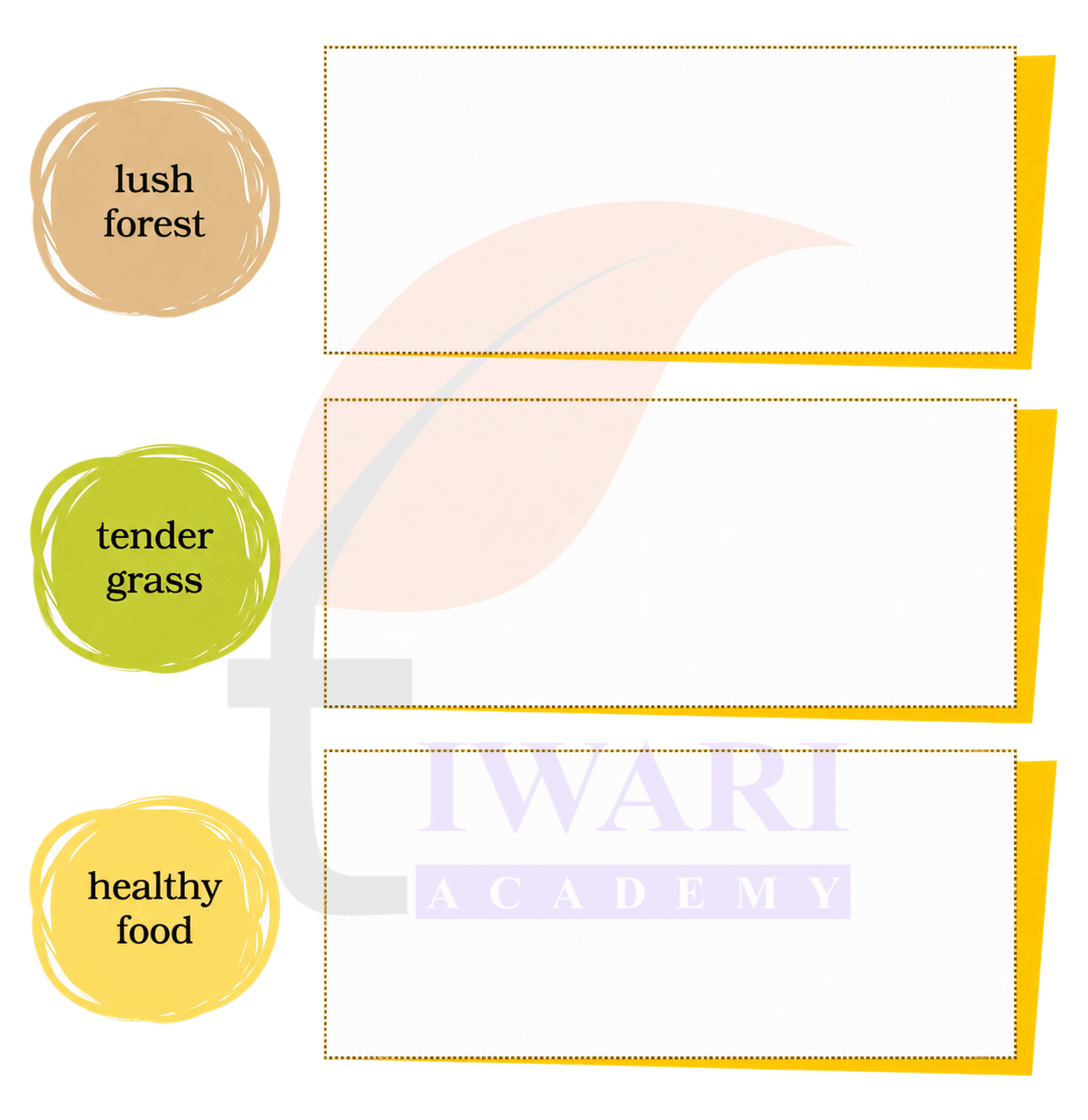
B. Look at the following words.
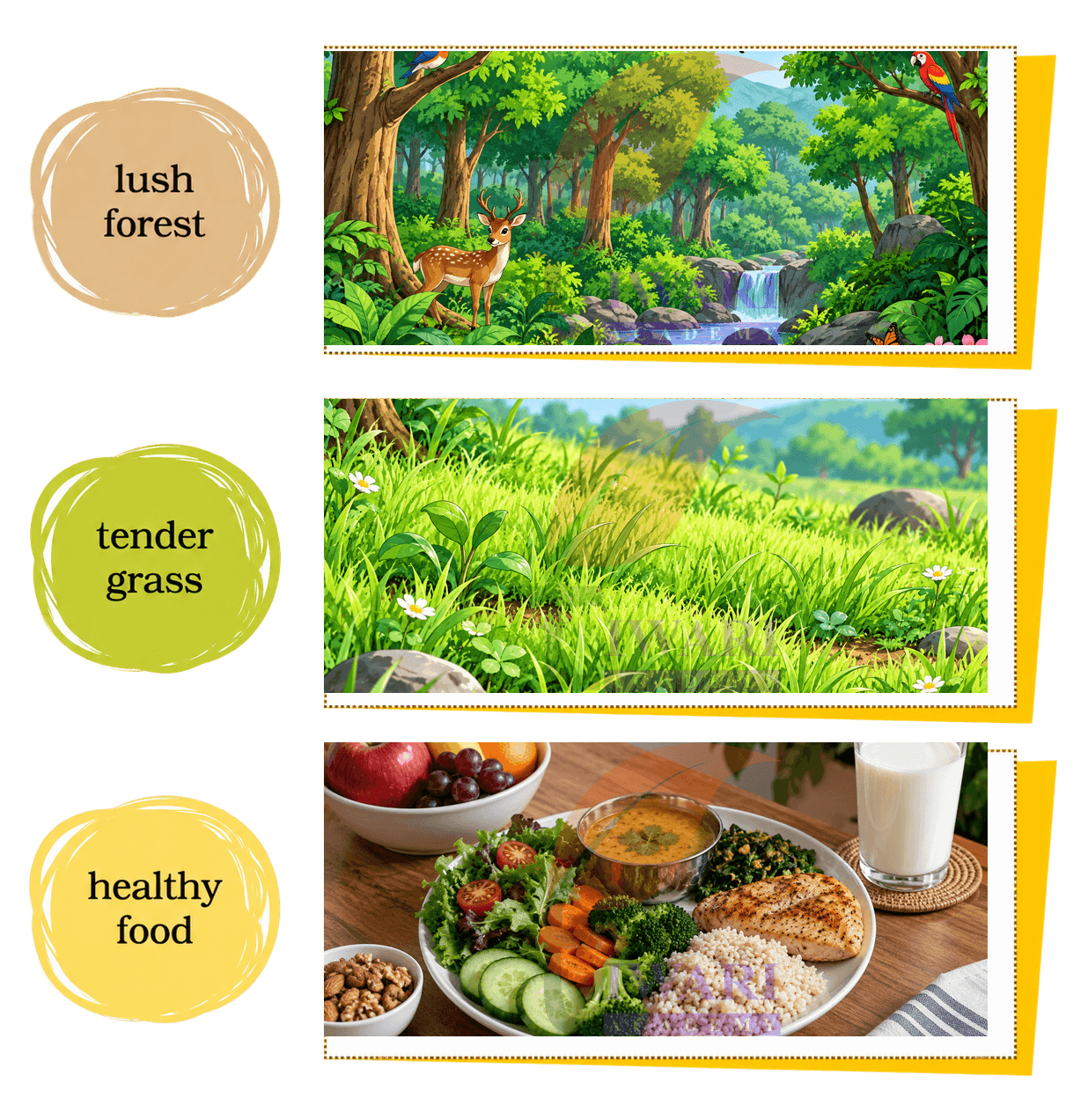
lush forest, friendly animals, shaded
spot, tender grass, healthy food
These words are descriptive words that give us more details about scenes, people and objects. These words are used to make writing more interesting.
Draw the image that comes to your mind when you read the following.
Answer:
C. Read the following sentence.
Each day, he warmly greeted his fellow animals and birds.
The word ‘warmly’ is an adverb. Here, ‘warmly’ tells the way or the manner of the stag’s greeting.
Let’s take a look at some more examples:
• The old stag slowly recovered.
• The rabbit quickly ate the carrots.
The adverbs in the above sentences describe:
• how the old stag recovered.
• how the rabbit ate the carrots.
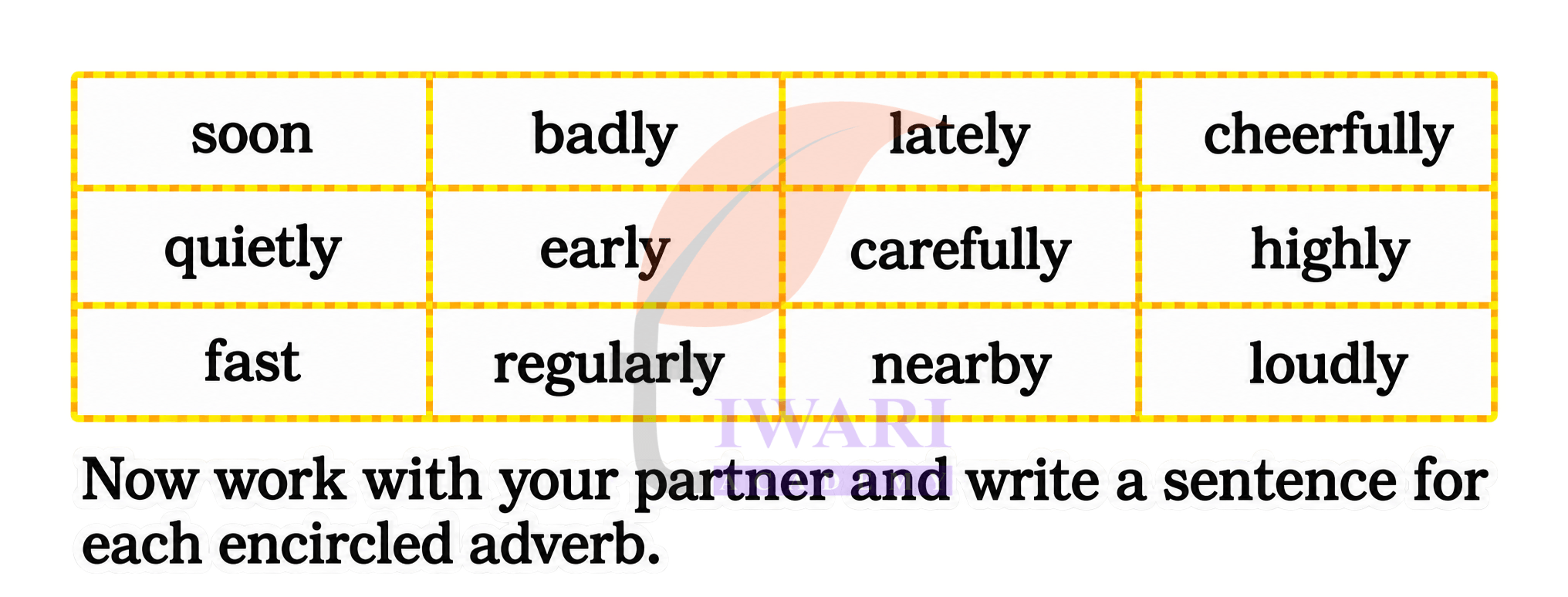
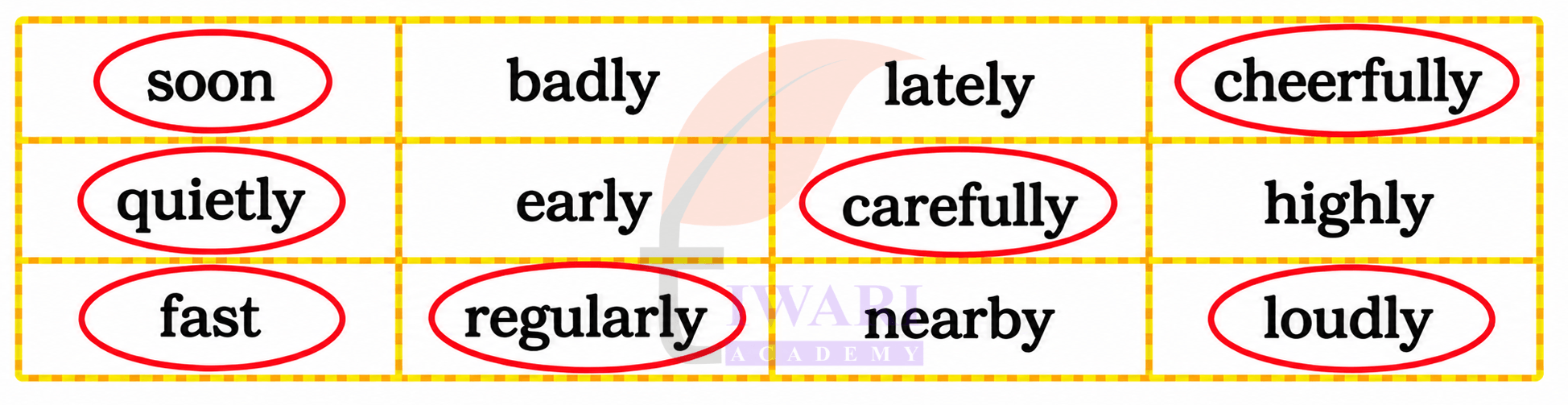
Encircle the adverbs that describe how something is done.
See Answerbadly – The boy was badly hurt.
cheerfully – The children cheerfully greeted their teacher.
quietly – The baby slept quietly.
carefully – Riya carefully carried the glass.
fast – The rabbit ran fast.
loudly – The dog barked loudly.
Page 50 – Let us Write
A. Complete the story by writing dialogues in the speech blurbs.
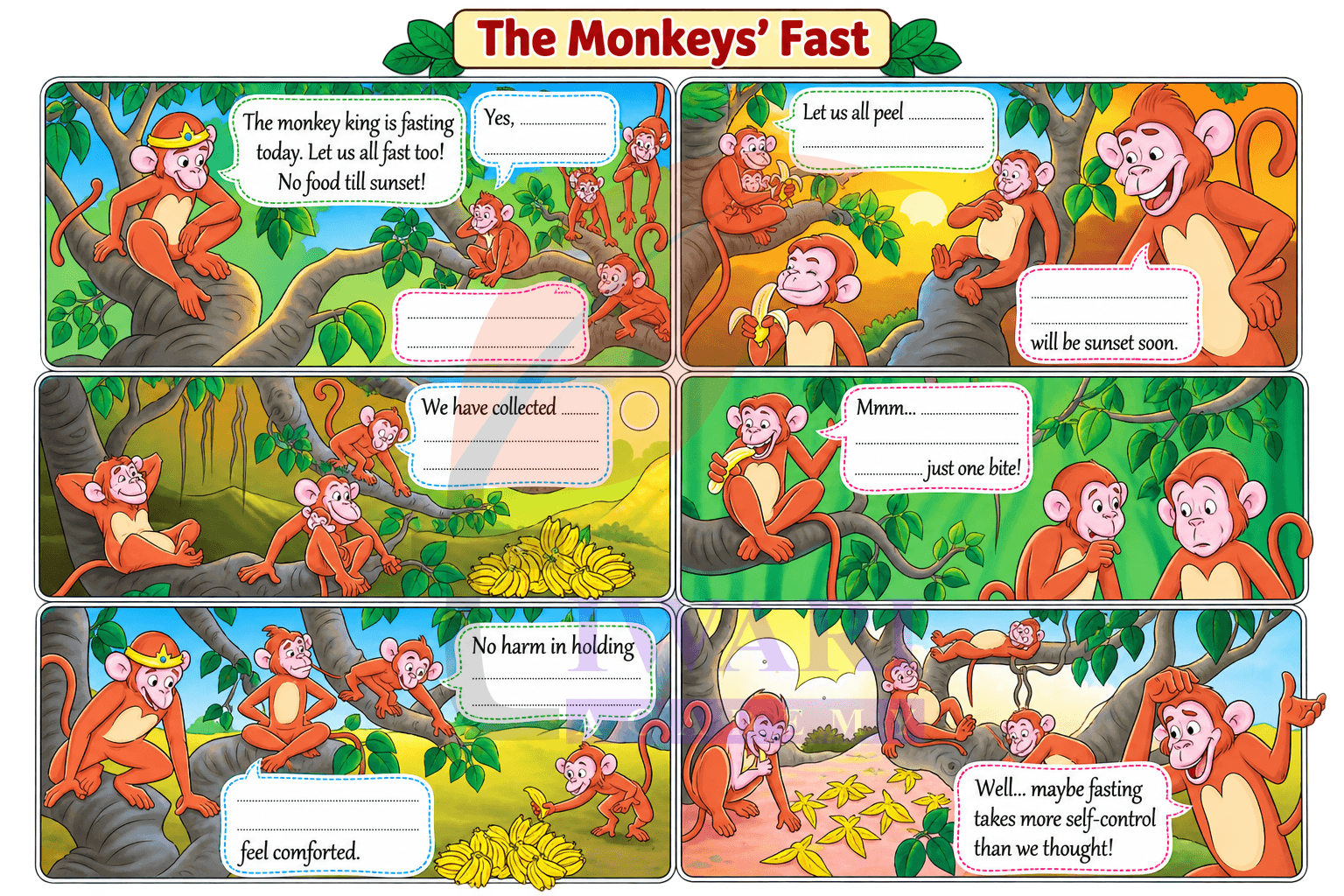
Answer:
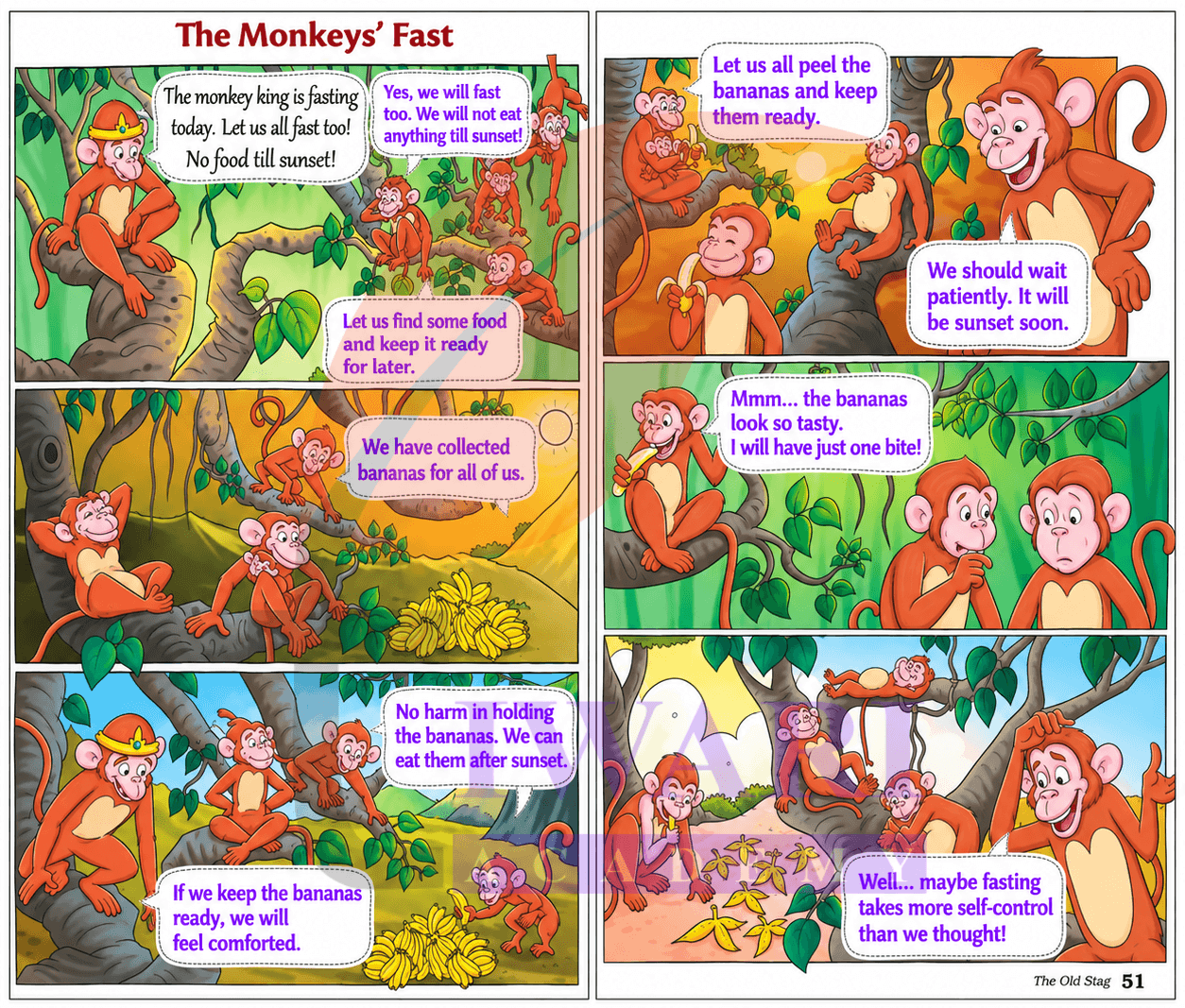
B. Write about your best friend and complete the paragraph.
My best friend’s name is ……………………………………… .
……….. is a ……….. . ………… is ………… years old. ………. studies in class ………….. . There are ……………………… members in ……….. family. ………………… hobbies are………………………………………………….. .
………….. wants to be a ……………………. . When we are together, we ……………… .
………. is my best friend because ……………………………………………. .
See AnswerMy best friend’s name is Riya. Riya is a girl. She is 9 years old. She studies in class 4. There are 4 members in her family. Her hobbies are drawing, dancing, and reading storybooks. She wants to be a teacher. When we are together, we play games, share snacks, and help each other with homework. Riya is my best friend because she is kind, funny, and always helps me when I need her. We have a lot of fun together and I feel happy when she is around.
Page 53 – Let us Speak
Look at the picture.
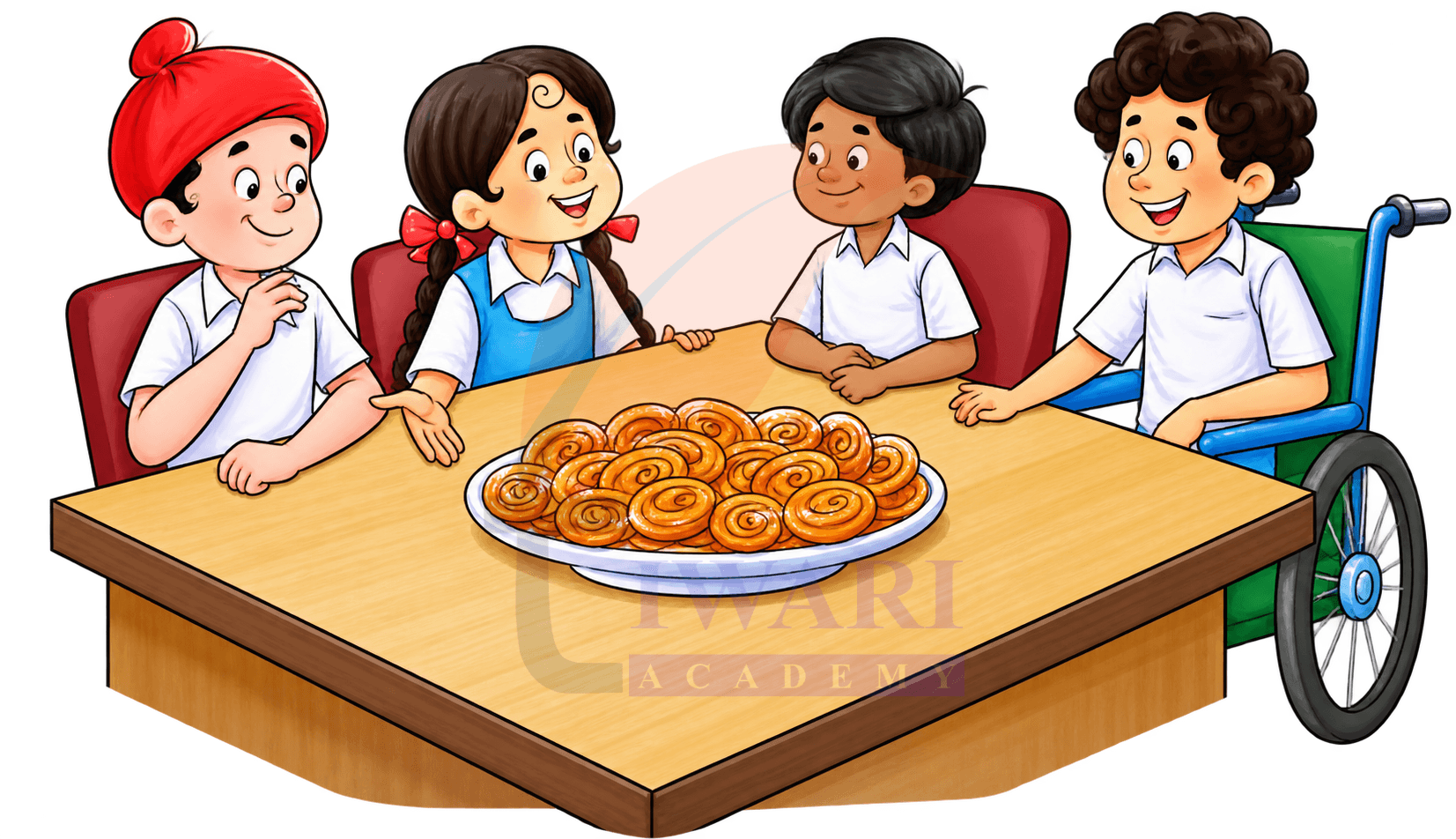
Imagine a large bowl of delicious jalebis is in your classroom. You and your friends start enjoying the sweets, one by one. Everyone loves the jalebis so much that you keep reaching for more. Now, think about what might happen next.
Discuss the following in the class:
1. How would you feel if the jalebis were almost finished, but some friends hadn’t had enough yet?
See AnswerI would feel a little sad because it’s not fair if everyone doesn’t get to eat. I would want my friends to enjoy the jalebis too.
2. What will happen to the bowl of jalebis after some time?
See AnswerAfter some time, the bowl of jalebis will be empty because everyone will keep eating them until they are all gone.
3. Why is it important to share when we have something that everyone enjoys?
See AnswerIt is important to share because everyone feels happy when they get a chance. Sharing shows kindness and helps us stay good friends.
4. How can we make sure there are enough jalebis for everyone to enjoy?
See AnswerWe can make sure by taking only one or two at a time and waiting for our turn. We can also count how many people are there and divide the jalebis equally.
Page 54 – Let us Do
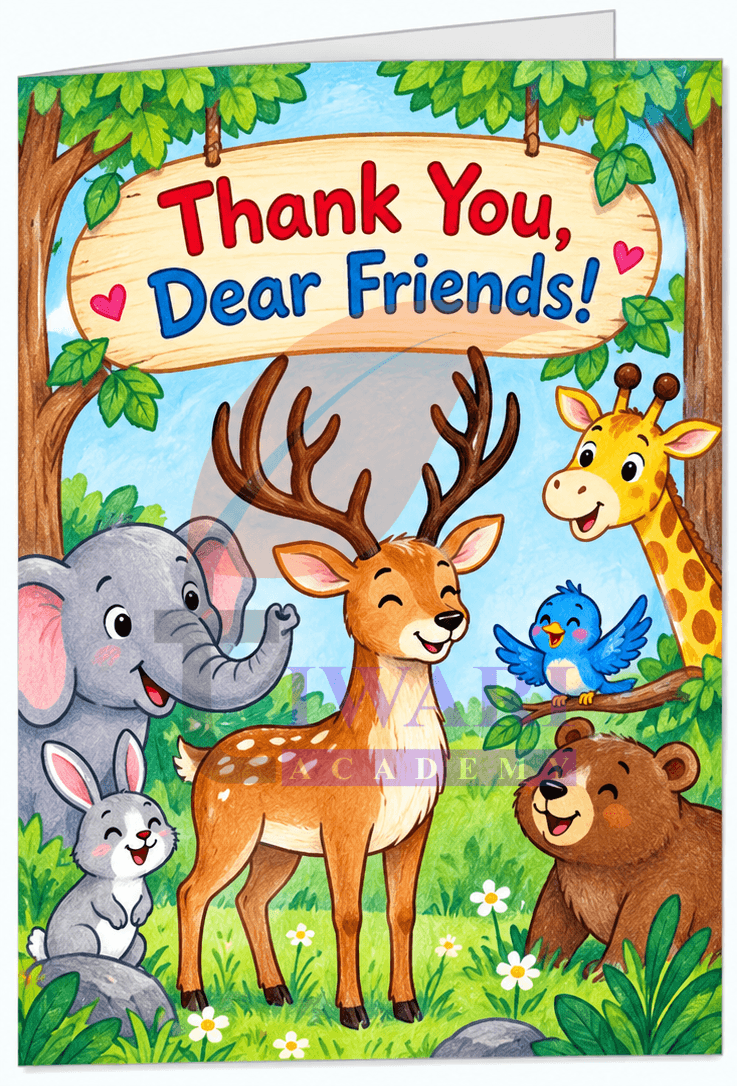
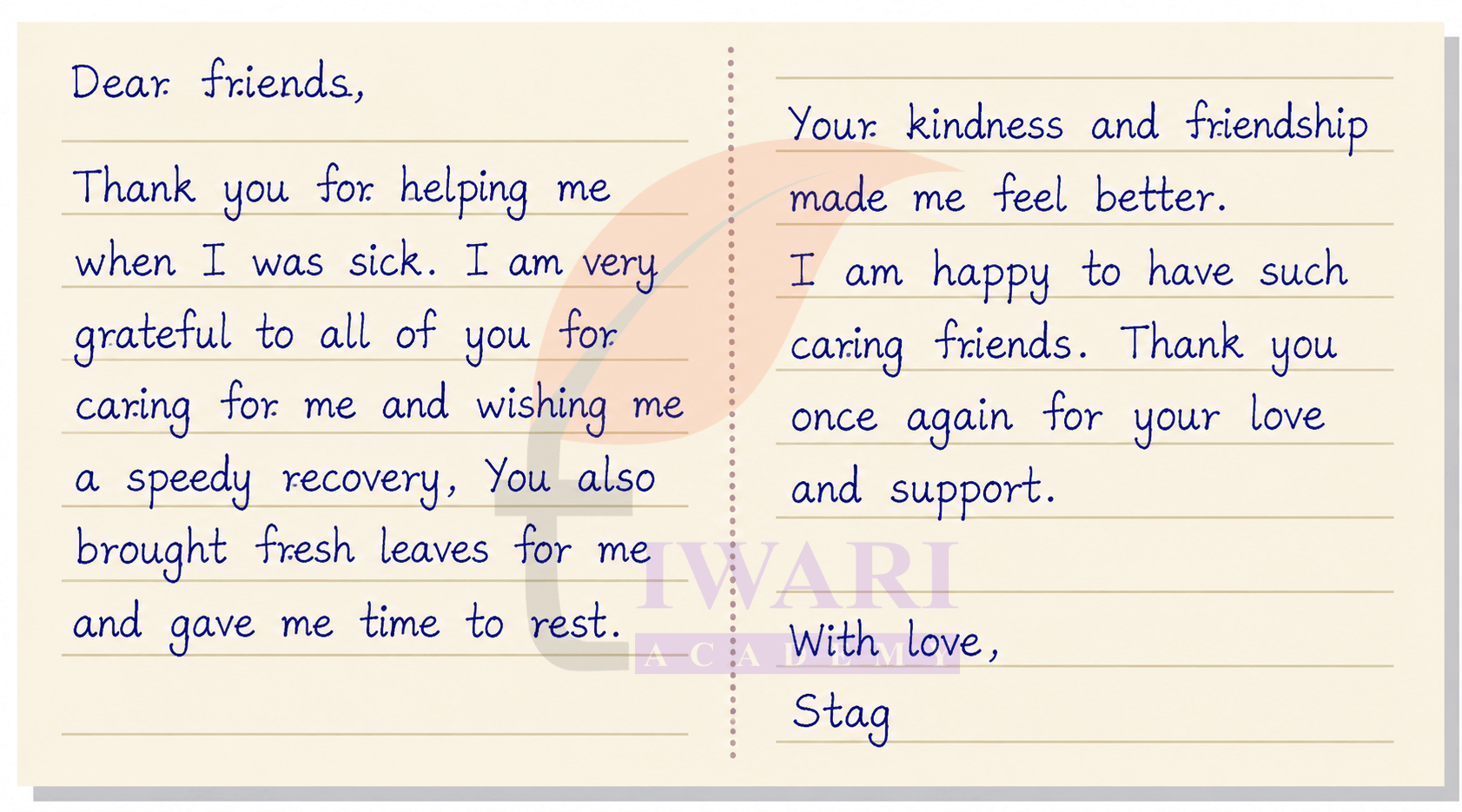
Create a Thank You Card from the Old Stag.
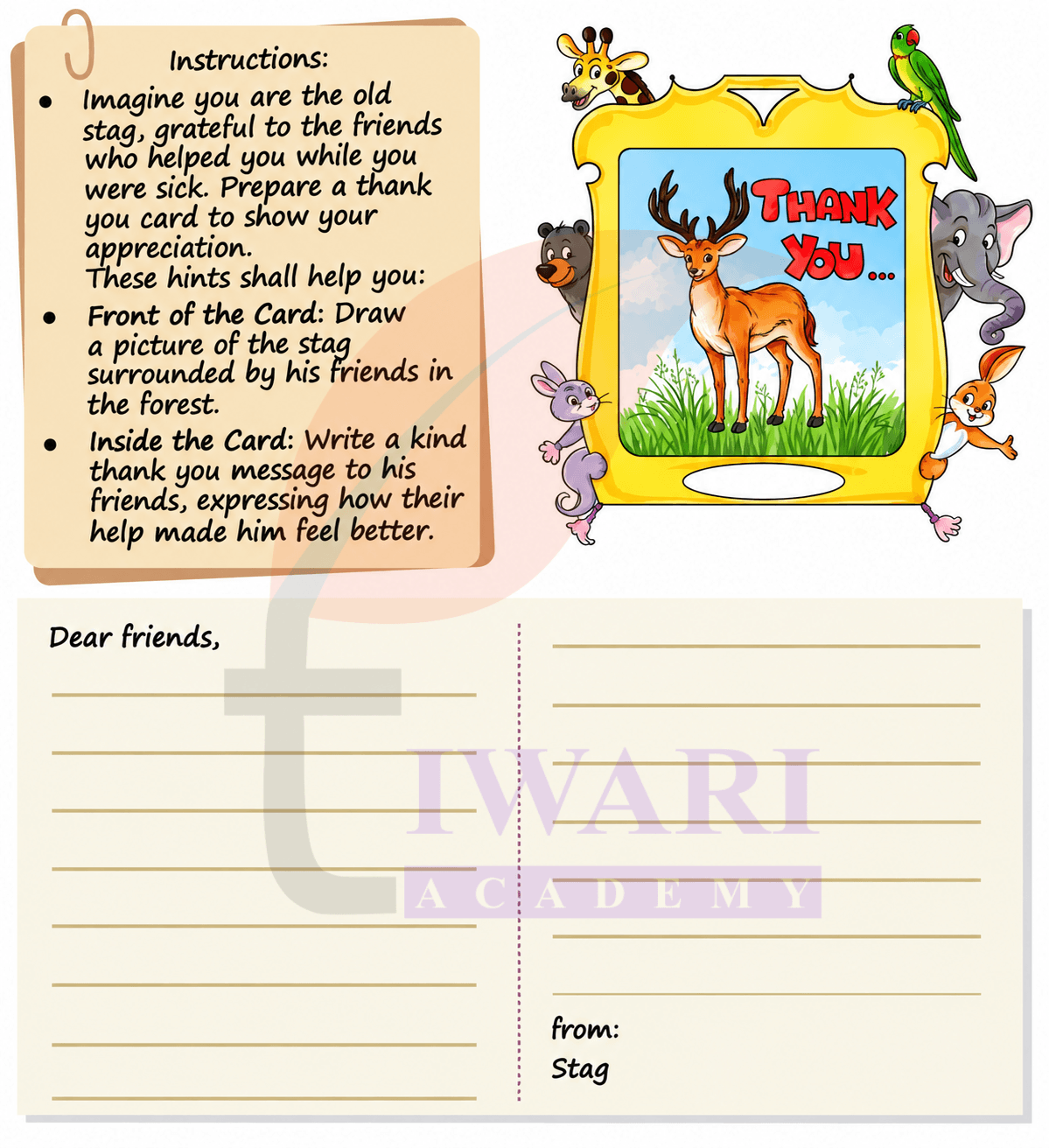
Answer:
Class 4 English Santoor – Unit 2: My Beautiful World – Chapter 5 The Old Stag – Hindi Translation
Class 4 English Santoor Chapter 5 English to Hindi Translation
In a lush forest lived an old stag who was known for his kindness. Each day, he warmly greeted his fellow animals and birds. Though the forest offered plenty of food, the stag preferred staying on a small hillock with tender grass.
Hindi Translationएक हरे-भरे जंगल में एक बूढ़ा बारहसिंगा रहता था, जो अपनी दयालुता के लिए जाना जाता था। हर दिन वह अपने साथी जानवरों और पक्षियों का स्नेहपूर्वक अभिवादन करता था। हालाँकि जंगल में खाने की भरपूर चीज़ें थीं, फिर भी वह बारहसिंगा एक छोटे से टीले पर रहना पसंद करता था, जहाँ कोमल घास उगती थी।
The hillock was covered in soft, green grass, which the old stag enjoyed.
Every day, he would come down to meet his friends, and all the animals and birds loved him.
Hindi Translationटीला नर्म, हरी घास से ढका रहता था, जिसे बूढ़ा बारहसिंगा बहुत पसंद करता था।
हर दिन वह नीचे उतरकर अपने दोस्तों से मिलता था और सभी जानवर और पक्षी उसे बहुत पसंद करते थे।
One day, the stag fell ill. He struggled to reach the hillock.
The stag knew that fresh, healthy food and proper rest would help him to get well soon, so he ate the tender grass and decided to rest for a while.
Hindi Translationएक दिन वह बारहसिंगा बीमार पड़ गया। उसे टीले तक पहुँचने में भी कठिनाई होने लगी।
बारहसिंगे को पता था कि ताज़ा, पौष्टिक भोजन और उचित आराम उसे जल्दी ठीक होने में मदद करेंगे। इसलिए उसने कोमल घास खाई और कुछ देर आराम करने का फैसला किया।
The old stag could not go down the hillock to greet his friends.
His friends were worried. When they learnt that the stag was unwell, they came to check on him.
Hindi Translationअब बूढ़ा बारहसिंगा टीले से नीचे उतरकर अपने दोस्तों से नहीं मिल पा रहा था।
उसके दोस्त चिंतित थे। जब उन्हें पता चला कि बारहसिंगा बीमार है, तो वे उसका हाल-चाल जानने के लिए टीले पर आए।
“Dear stag! How are you?” asked a deer.
“Too weak to come down and meet you all,” replied the stag.
“Get well soon, dear stag!” said the deer.
Hindi Translation“प्यारे बारहसिंगे! कैसे हो?” एक हिरन ने पूछा।
“मैं इतना कमज़ोर हो गया हूँ कि तुम सब से मिलने नीचे नहीं आ सकता”, बारहसिंगे ने जवाब दिया।
“प्यारे बारहसिंगे! जल्दी ठीक हो जाओ!” हिरन ने कहा।
The animals wished him a speedy recovery and left.
However, before they went back into the forest, the animals ate the fresh green grass growing on the hillock.
Hindi Translation‘जल्दी ठीक हो जाओ, प्यारे बारहसिंगे!’
बारहसिंगे के दोस्तों ने उसके जल्दी ठीक होने की शुभकामनाएँ दीं और वहाँ से चले गए।
लेकिन जंगल में वापस जाने से पहले, उन जानवरों ने टीले पर उगी ताज़ी हरी घास खा ली।
“The grass is so tender and nice”, said an elephant.
“I have never eaten such juicy green leaves”, said a giraffe.
Hindi Translation“यह घास कितनी नर्म और अच्छी है!” एक हाथी ने कहा।
“मैंने कभी इतनी रसीली हरी पत्तियाँ नहीं खाई हैं”, एक जिराफ़ ने कहा।
Word soon spread about the tender green grass. Soon,
all the animals who came to visit the stag feasted on the tender grass. Anyone who came to visit the stag would also eat the grass.
Hindi Translationजल्द ही नर्म हरी घास की बात पूरे जंगल में फैल गई।
कुछ ही समय में, बारहसिंगे से मिलने आने वाले सभी जानवर उस नर्म घास को खाने लगे। जो भी बारहसिंगे से मिलने आता, वह घास भी खा लेता।
Soon, there was not much grass left for the old stag to eat. He started becoming weaker as days passed. His friends felt ashamed. They realised how their greed had made them forget about their friend, the old stag.
Hindi Translationकुछ ही समय में बूढ़े बारहसिंगे के खाने के लिए बहुत कम घास बची थी। दिन बीतने के साथ वह और भी कमज़ोर होता गया। उसके दोस्तों को शर्म महसूस हुई। उन्हें एहसास हुआ कि उनके लालच ने उन्हें अपने दोस्त, बूढ़े बारहसिंगे को भुला दिया था।
They understood that not much grass was left for the stag to eat and recover. The animals decided to find food elsewhere in the forest and not disturb the hillock. Some of them also brought fresh leaves for their friend.
Hindi Translationउन्होंने समझा कि बारहसिंगे के खाने और ठीक होने के लिए अब बहुत कम घास बची है। जानवरों ने तय किया कि वे जंगल में कहीं और से भोजन खोजेंगे और टीले को परेशान नहीं करेंगे। कुछ जानवर अपने दोस्त के लिए ताज़ी पत्तियाँ भी लाए।
It rained well that week. The grass soon grew back, and the old stag had enough food once again. Slowly, the old stag recovered from the illness.
The animals learnt the most important lesson:
“Nature has enough for everybody. But we need to use its resources wisely.”
Hindi Translationउस हफ़्ते अच्छी बारिश हुई। घास फिर से उग आई और अब बूढ़े बारहसिंगे के पास फिर से पर्याप्त भोजन था। धीरे-धीरे बूढ़ा बारहसिंगा अपनी बीमारी से ठीक हो गया।
जानवरों ने सबसे महत्वपूर्ण सबक सीखा:
‘प्रकृति में सभी के लिए पर्याप्त है। लेकिन हमें उसके संसाधनों का समझदारी से उपयोग करना चाहिए।’
Class 4 English Marigold Solutions
Class 4 English Unit 5 Chapter 1 and Chapter 2
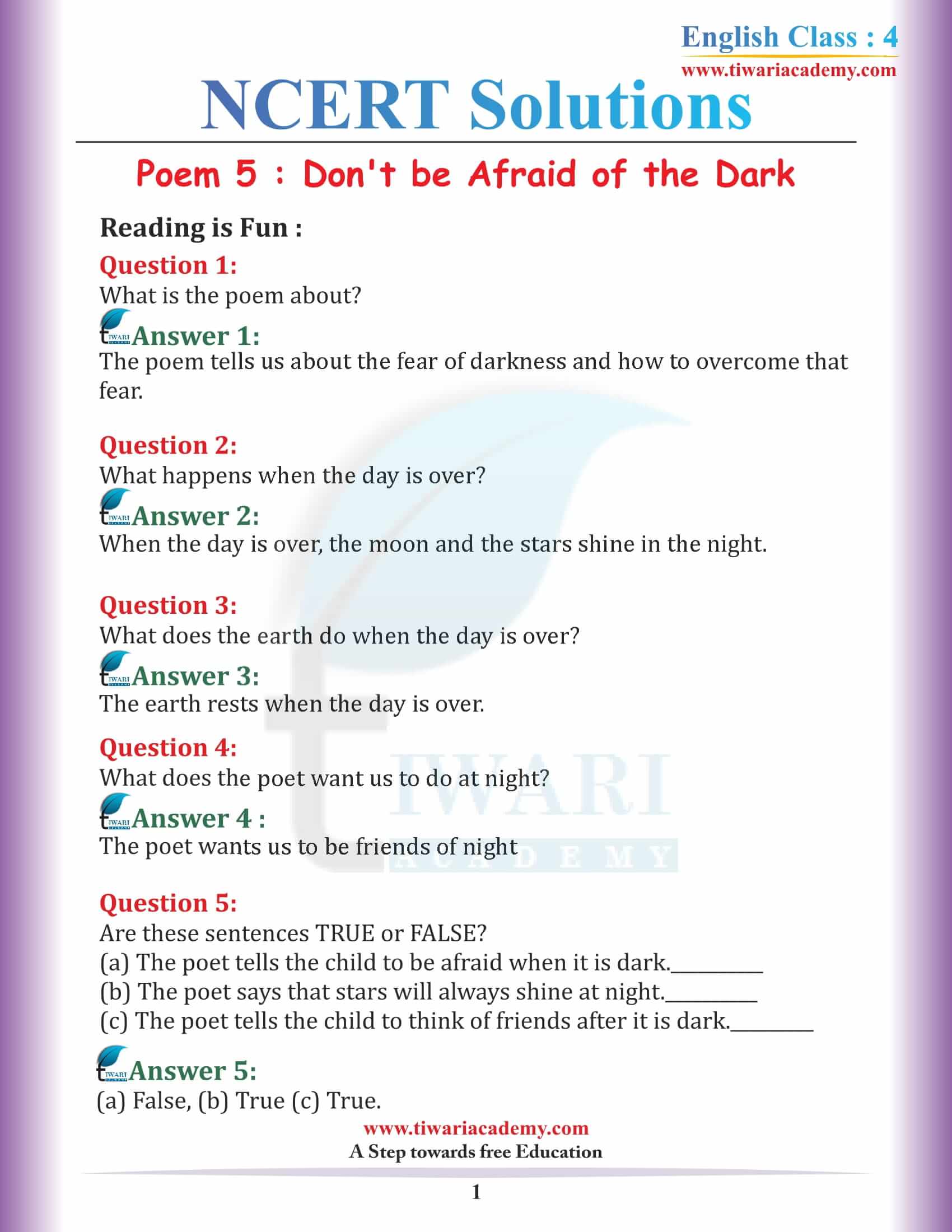
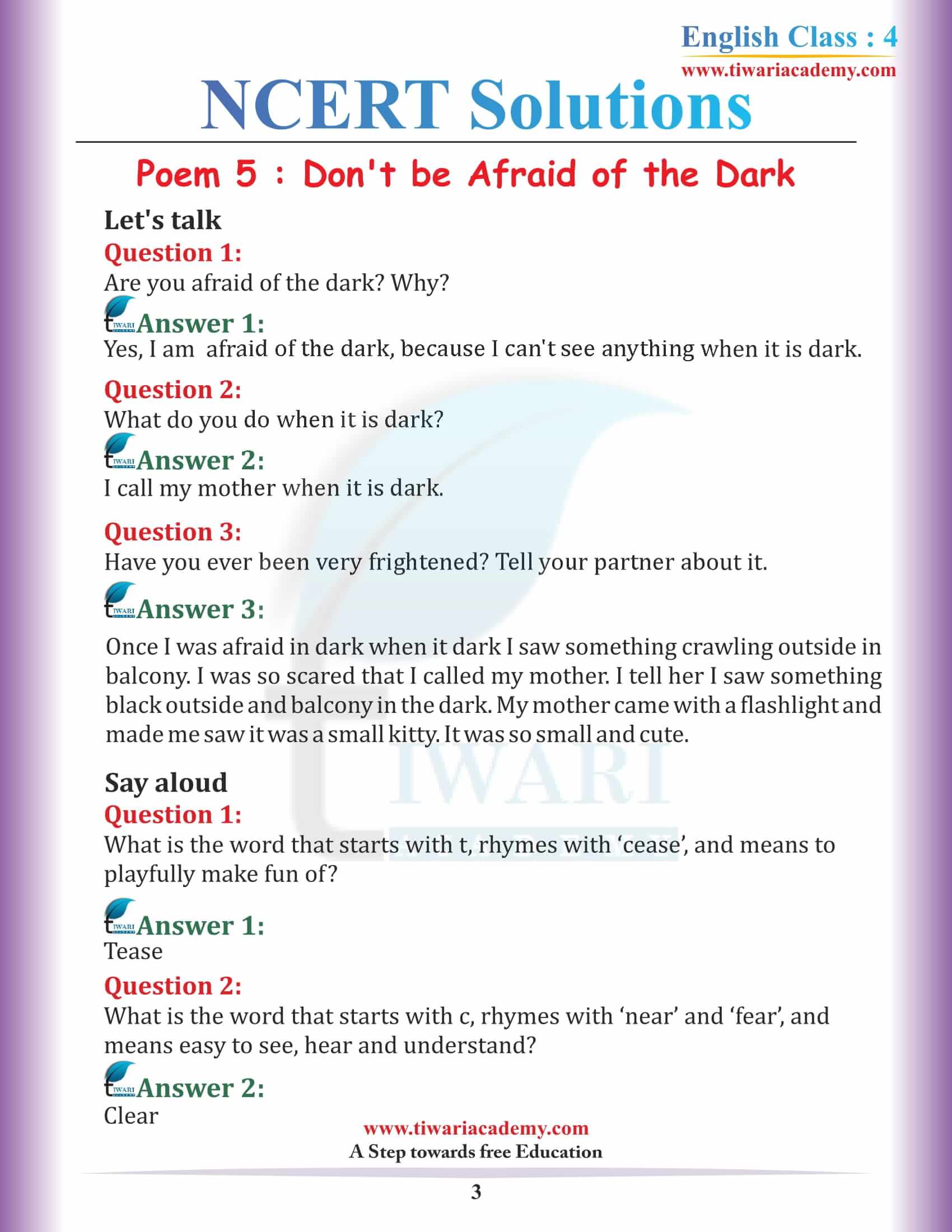
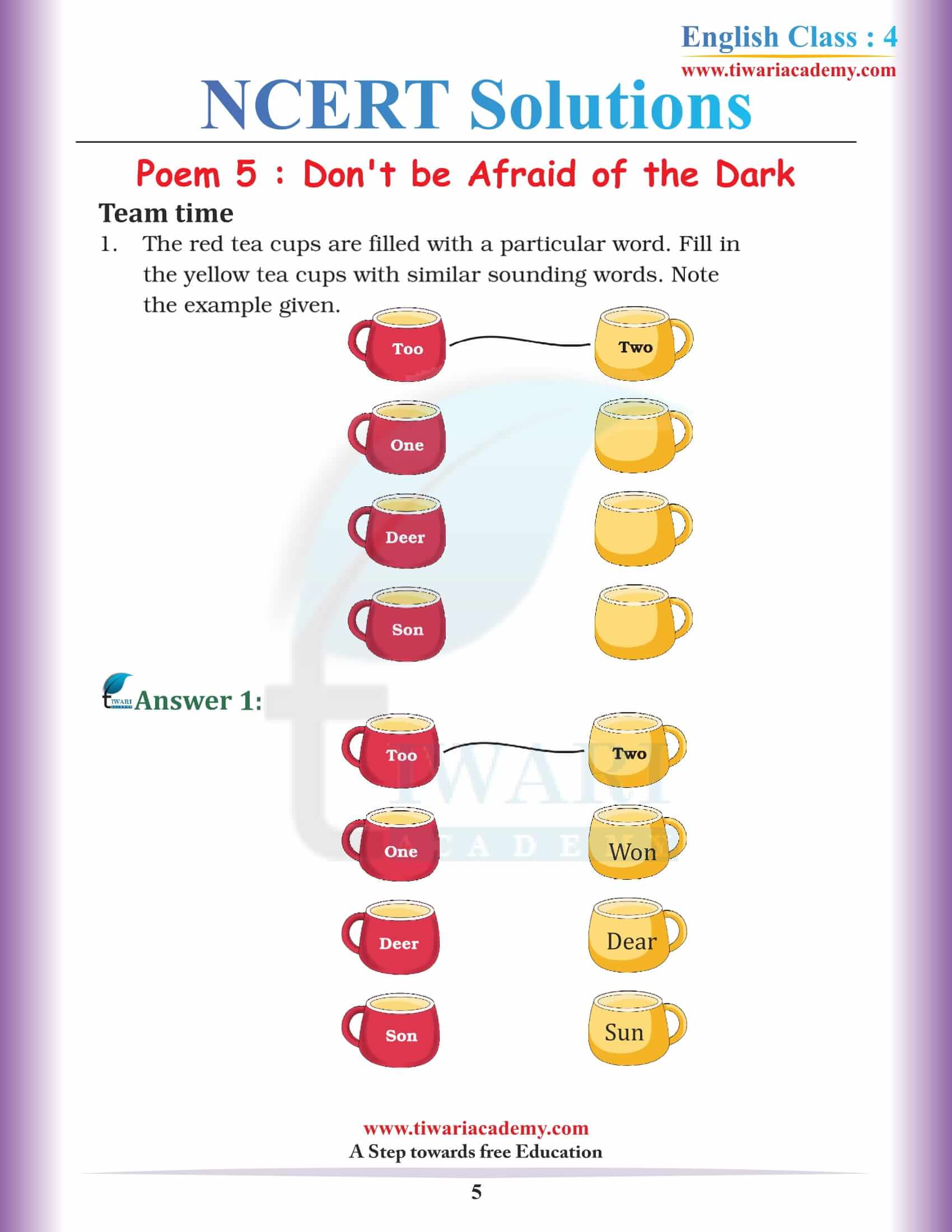
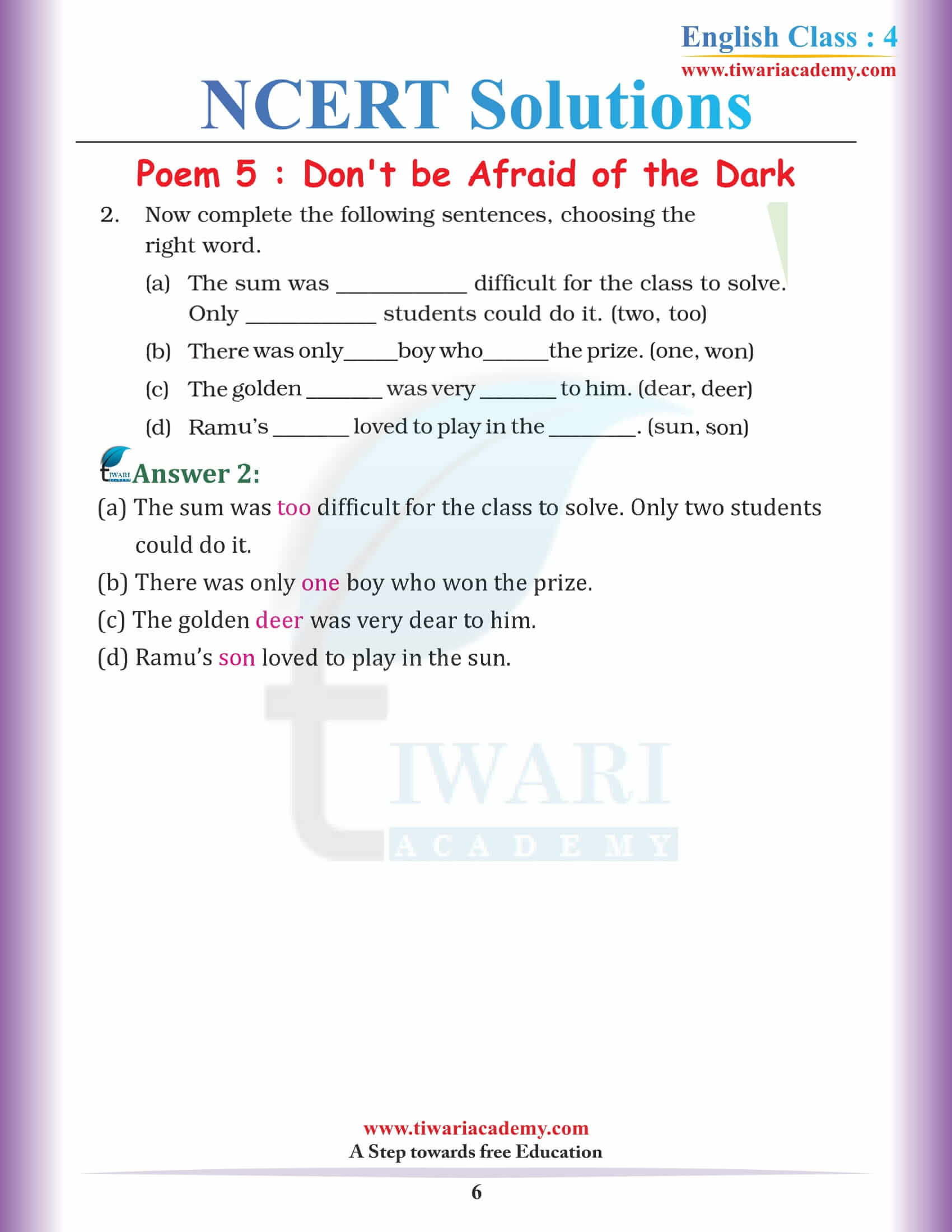
Class 4 English Unit 5 Chapter 1 Don’t be afraid of dark – Summary
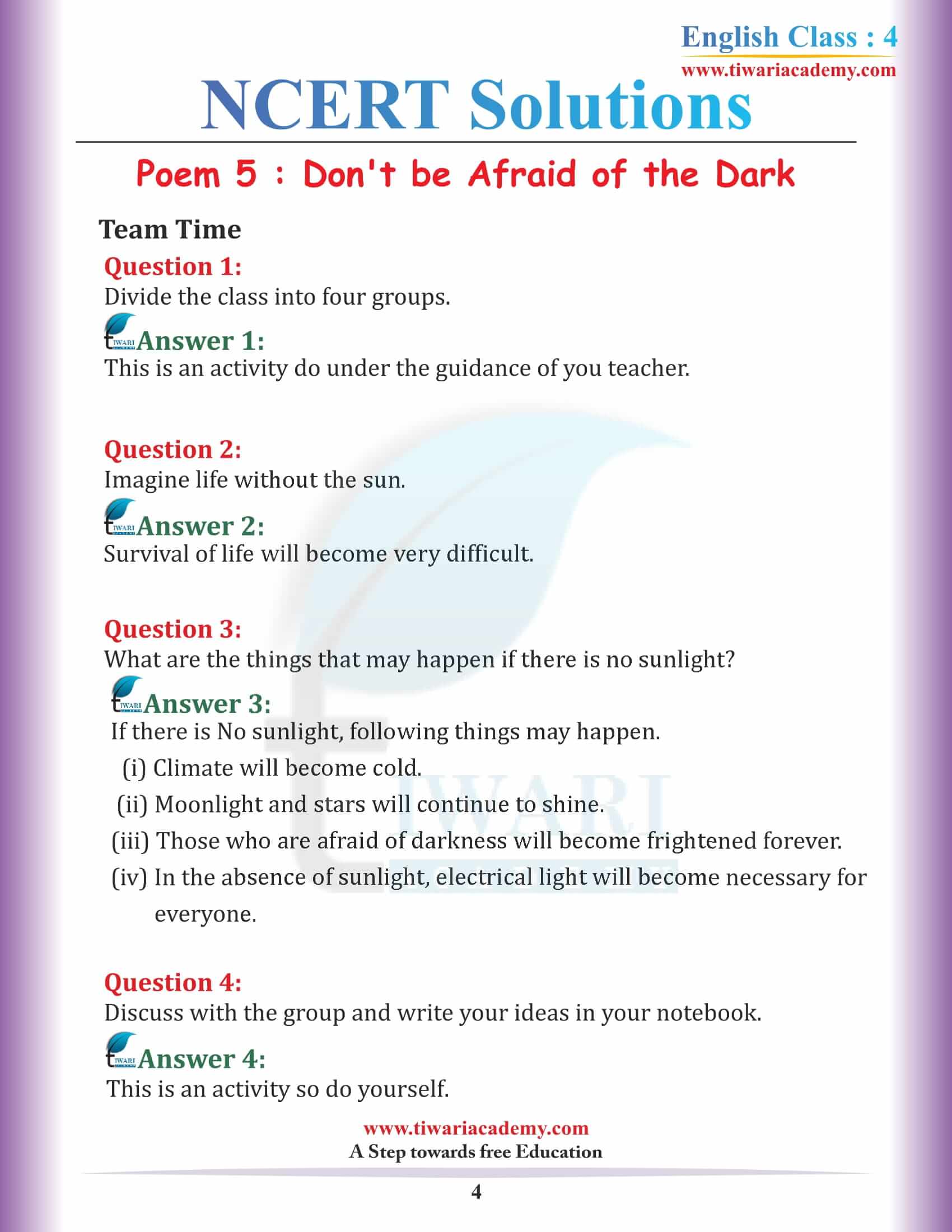
One of the best poet and writer Ruskin Bond wrote this poem about the night and asking not be afraid of dark instead be friends with it. The Poet says that after the day the earth must rest as we humans do because the sun was harsh with it and Moonlight is so calm and also, there are stars to be with us and will be always there.
The poet says don’t afraid of the dark and to be friends with It and think about the friend you have whether it is far or near. In a day we have to deal with our toughest problems but at night all the problems are gone so the night is beautiful.
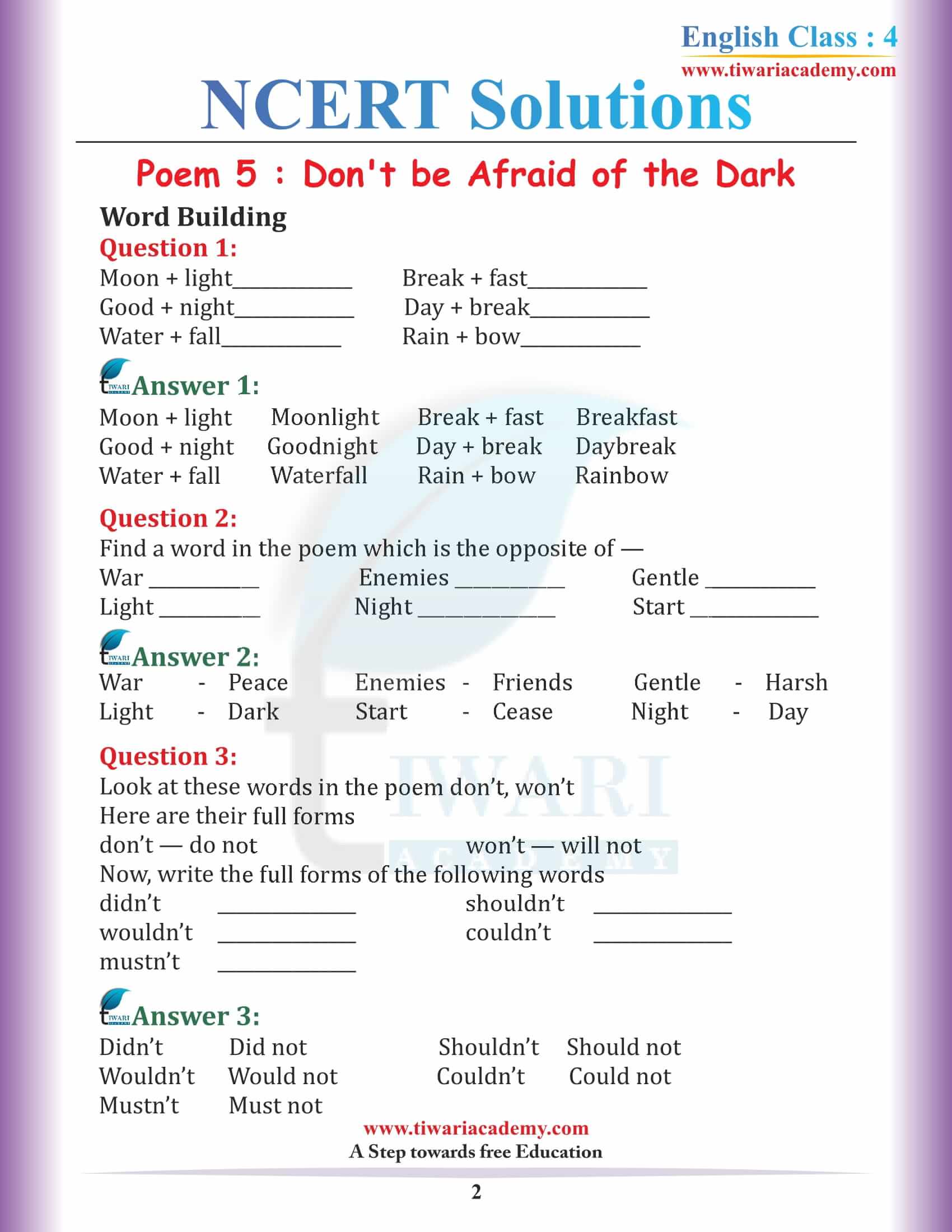
4th English Unit 5 Chapter 1 Word Meaning
| Word | Meaning |
|---|---|
| Afraid | Feared |
| Dark | The absence of Light |
| Rest | Relaxing, Doing Nothing |
| Harsh | Rough |
| Forever | Remain Always |
| Troubles | Problems |
| Cease | Captured |
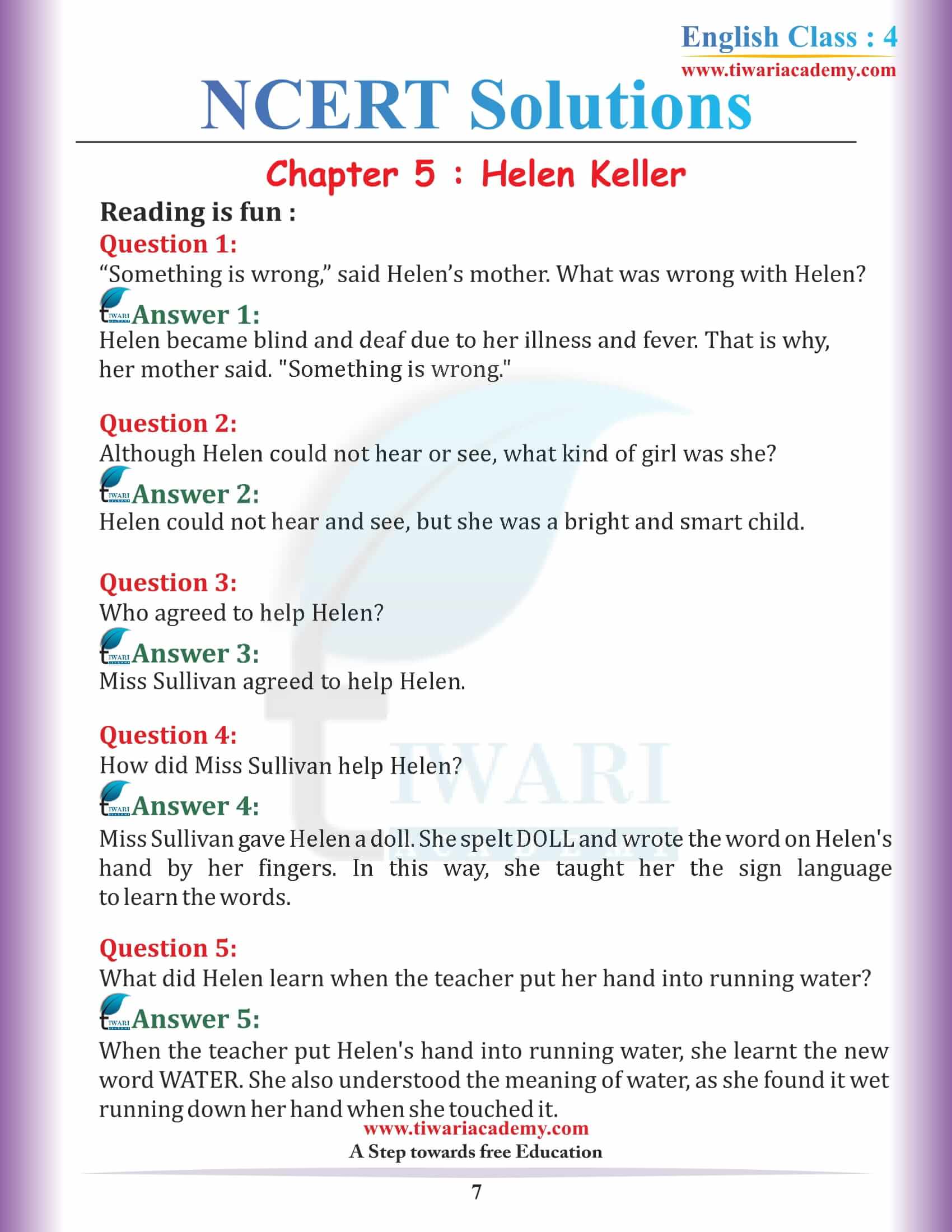
Class 4 English Unit 5 Chapter 2 Helen keller – Summary
Hellen Keller was born a healthy child in the summer of 1880 in Alabama. Sometime later the baby Helen fell sick and everyone got worried that she may not live anymore. But she did survive the illness. After she recovered a=something was wrong with her due to the illness Helen lost her power of hearing and vision.
Helen was a very tough and intelligent girl and her mother believe in her but she locked herself. She never let anyone comb her, changes her clothes, and sometimes lay down on the floor hitting her feet and getting angry.
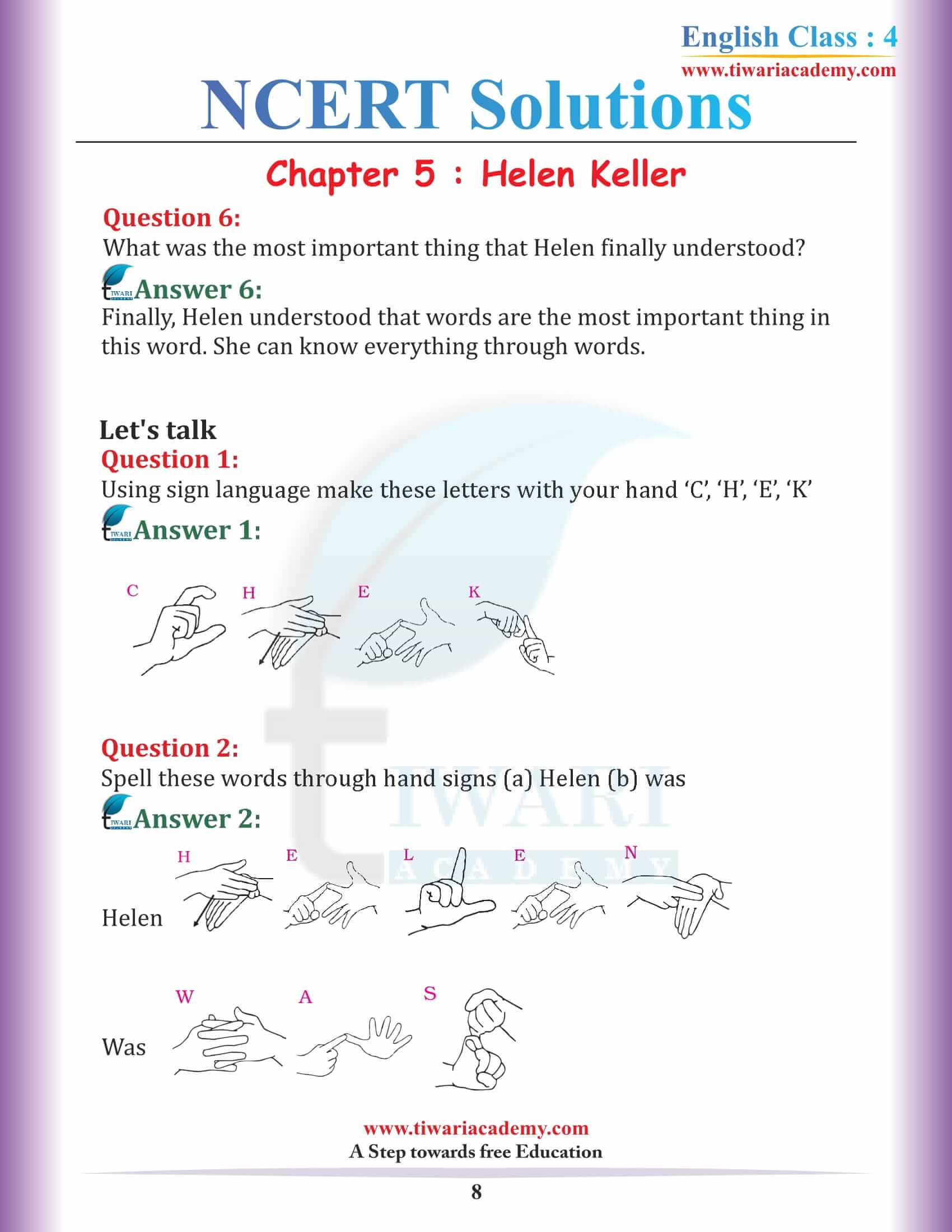
Her parents tried to give her everything. One day, she wanted that her parents found her a teacher to teach. Miss Sullivan was very the strict and kind-hearted teacher. She gave her a Doll and Wrote on her palm with finger D O L L. Hellen quickly understood the word call doll, and she loved to play with it. On a particular day, Miss Sullivan took her near the tap and put her hands under running water. On the other hand, she wrote W A T E R. Hellen understood that thing that wet the hands and running down is water. She also understand that words mean everything in the world.
4th English Unit 5 Chapter 2 Word Meaning
| Word | Meaning |
|---|---|
| Dearly | Lovingly |
| Agreed | Understand and ready to follow the thought |
| Illness | Disease |
| Important | Thing which is required to do anything |